PRODUCT REVIEW
DJI Mic 3 Review: Pro-Level Wireless Audio in a Pocket-Size Kit
- Model
- DJI Mic 3
- ASIN
- B0F995J8FR
- Release year
- 2025
Check Current Price
Check price on Amazon →PRICE DISCLOSURE
Prices, availability, seller details, subscriptions, and included accessories can change. Confirm the final terms on the seller or manufacturer website. Affiliate links — AIFOLUNE may earn a commission at no extra cost to you.
Based on official product information, documentation, and independent market research. No hands-on testing is implied unless the article explicitly says otherwise.
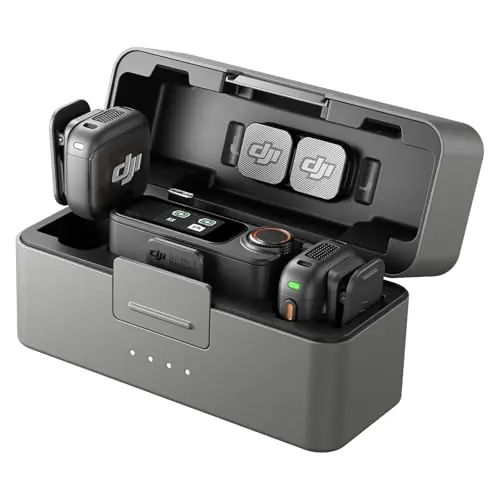
DJI Mic 3 compresses production safeguards—internal recording, dual-file capture, adaptive gain, timecode, dual-band transmission, and charging-case power—into a small wireless kit. Its value comes from preventing failed takes and reducing synchronization work, not simply from having more settings.
QUICK VERDICT
Choose DJI Mic 3 when internal backup, timecode, two-person capture, multi-camera synchronization, or future expansion can protect paid or difficult-to-repeat work. Phone-first creators who value instant setup over production safeguards should choose a simpler system.
BEST FOR
It suits interviewers, YouTubers, educators, event teams, documentary crews, wedding filmmakers, and small productions that need two speakers, backup files, timecode, or repeatable camera workflows.
MAIN TRADE-OFF
Higher cost and setup complexity
COMPLETE SETUP
The base kit covers two speakers, but the real setup may also require camera or phone adapters, 3.5mm cables, USB-C mobile receivers, lavalier microphones, wind protection, mounting clips, headphones, storage workflow, and extra receivers or transmitters. Confirm every connector and timecode path before budgeting a multi-camera system.
AT A GLANCE
Key Specifications
- Model: DJI Mic 3
- ASIN: B0F995J8FR
- Release year: 2025
- Two transmitters, receiver, and charging case
- 32GB storage in each transmitter
- 24-bit or 32-bit-float internal recording
- LTC and Audio-TC timecode support
- 2.4GHz and 5GHz transmission bands
- Up to 400m stated open-area range under DJI test conditions
THE TRADE-OFFS
Pros and Cons
Pros
- Strong failed-take protection
- Useful multi-camera synchronization tools
- Two-person kit in one case
- Expandable architecture
- Fast access to gain and processing options
Cons
- Higher cost and setup complexity
- Some expansion requires extra hardware
- Compatibility must be checked per camera and phone
- Processing can sound unnatural when overused
- Wireless monitoring and backup discipline remain necessary
BEST MATCH
Who It’s For
It suits interviewers, YouTubers, educators, event teams, documentary crews, wedding filmmakers, and small productions that need two speakers, backup files, timecode, or repeatable camera workflows.
THINK TWICE
Who Should Skip It
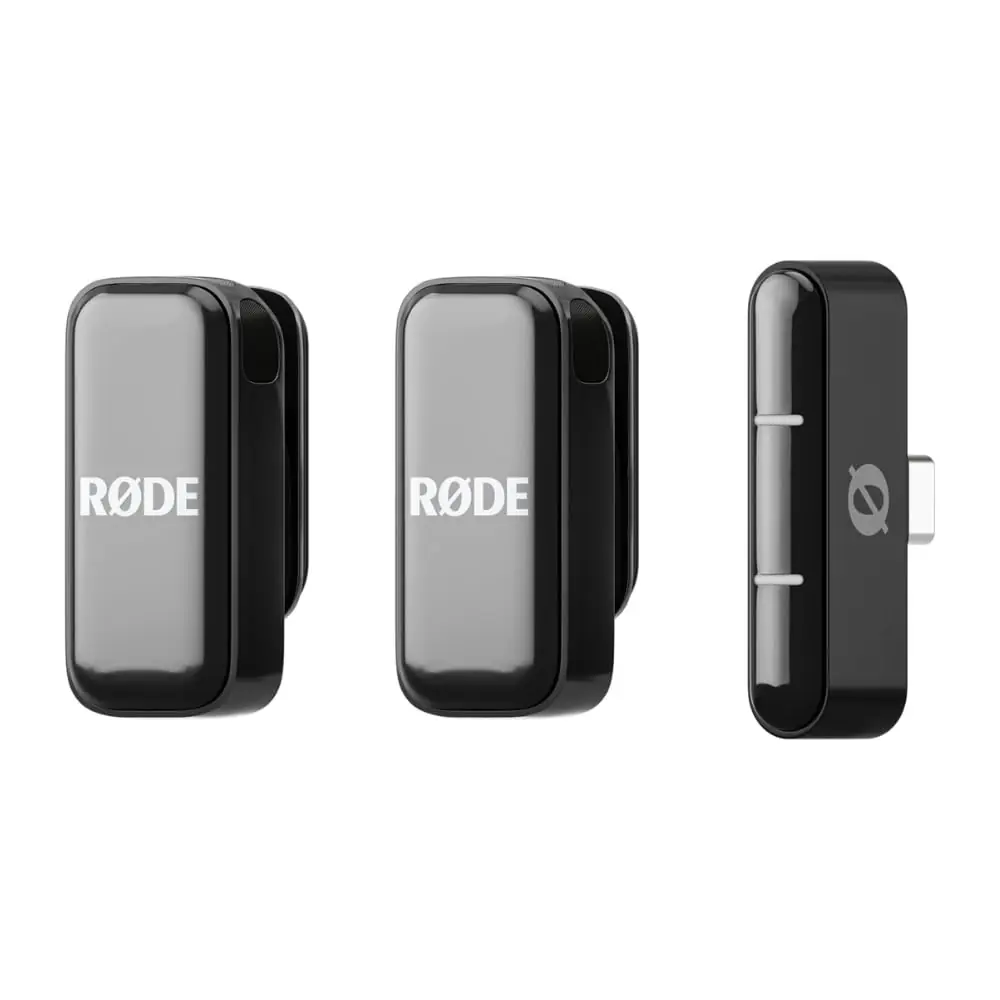
Skip it for occasional single-person phone clips, a fixed desk where a USB/XLR microphone is simpler, or workflows that will never use internal recording, timecode, or expansion. DJI Mic Mini and RØDE Wireless Micro reduce setup and cost for lighter work.
THE PRODUCT
Product Overview
DJI Mic 3 is a two-transmitter wireless microphone system with a camera receiver and charging case. DJI documents switchable 24-bit and 32-bit-float internal recording, dual-file capture, timecode, adaptive gain, two noise-cancellation levels, voice presets, and expansion to supported multi-transmitter and multi-receiver configurations.
DEEPER LOOK
Detailed Review
Complete setup and ownership cost
The base kit covers two speakers, but the real setup may also require camera or phone adapters, 3.5mm cables, USB-C mobile receivers, lavalier microphones, wind protection, mounting clips, headphones, storage workflow, and extra receivers or transmitters. Confirm every connector and timecode path before budgeting a multi-camera system.
Internal recording and timecode
Each transmitter stores WAV files internally; DJI lists different capacities for 24-bit, 32-bit float, single-file, and dual-file modes. Timecode supports common frame rates, but every camera and recorder must use a compatible connection and matching rate. A test sync should be completed before an important shoot.
Wireless range and real production conditions
Maximum range figures are measured in controlled open environments. Walls, bodies, crowded radio space, Lossless Audio, and multi-transmitter configurations reduce the useful margin. Keep line of sight where practical, scan the actual location, monitor the receiver, and retain internal backup for work that cannot be repeated.
Battery and file workflow
DJI rates transmitters for eight hours with power-intensive features disabled and extends total use through the case. Internal recording, noise cancellation, temperature, and charging behavior affect endurance. After each job, copy and verify files, preserve naming and timecode metadata, then recharge every component.
How This Article Was Prepared
This editorial review uses DJI’s official Mic 3 specifications, FAQ, compatibility guidance, and documented test conditions, workflow analysis, complete-setup cost, compatibility requirements, and clearly stated limitations. It does not claim hands-on testing. Software, firmware, bundles, compatibility, and availability can change.
OTHER OPTIONS
Alternatives
DJI Mic Mini emphasizes size, battery life, and simple two-person capture but omits internal recording and timecode. RØDE Wireless Micro is more phone-first. Systems from RØDE, Hollyland, and Saramonic may suit different camera, lavalier, or ecosystem requirements.
COMMON QUESTIONS
Frequently Asked Questions
Does DJI Mic 3 record internally?
Yes. DJI documents 24-bit and 32-bit-float WAV recording to built-in transmitter storage.
Does the charging case provide 28 hours of continuous transmitter use?
No. Total figures include recharging cycles and depend on active features and test conditions.
Is 32-bit float a substitute for correct placement?
No. It provides level-recovery headroom but cannot remove clothing rub, distance, room noise, or a blocked capsule.
Does timecode work with every camera?
No. Check frame rates, ports, adapters, and DJI’s current compatibility information.
Can four transmitters be recorded separately?
Only in supported configurations with compatible receivers, cameras, adapters, or software. Verify the complete signal path.
Should internal backup always be enabled?
Enable it when the storage, battery, and file-management trade-off is justified—especially for important or nonrepeatable work.
FINAL CHECK
Ready to decide?
Confirm the current configuration, included accessories, seller, and final price before ordering.
KEEP EXPLORING
Related Buying Guides
 Creator AudioBest Wireless Microphones for Creators in 2026: Three Kits for Different WorkflowsRead more →
 Creator WorkflowBest Tools for Video Creators in 2026: An AI-to-Publish WorkflowRead more →
 Creator AudioBest USB Microphones for Content Creators in 2026: Five Picks for Different Rooms and WorkflowsRead more →
KEEP EXPLORING